
Modular 101: What Modular Construction Really Is
Modular construction is frequently described as a faster or cheaper alternative to conventional building, yet these characterizations obscure its true nature.
Modular construction is not a product, nor is it a shortcut; it is a construction methodology that fundamentally alters how buildings are conceived, designed, coordinated, and delivered.
This article establishes a technical definition of modular construction, clarifies how it differs from other prefabricated approaches, and explains why modular must be treated as an early design framework rather than a late-stage solution.
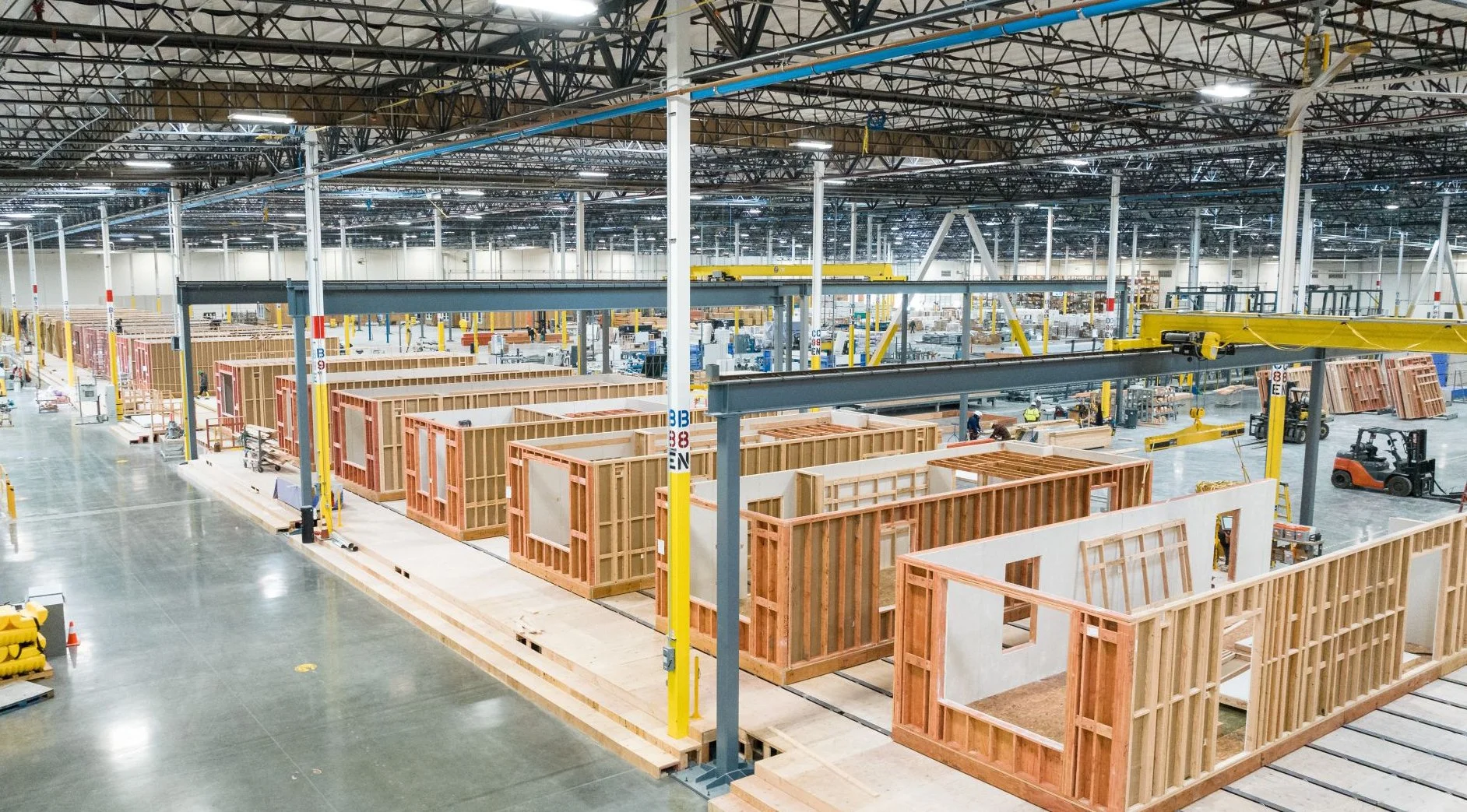
Photo Credit: Volumetric Building Companies
Introduction: The Persistent Misunderstanding of Modular
In both professional and public discourse, modular construction is often framed as an outcome rather than a process. It is routinely associated with speed, cost certainty, or factory efficiency, leading many project teams to approach modular as a procurement decision that can be introduced after design intent has already been established.
This misunderstanding is one of the primary reasons modular projects struggle. When modular is treated as an interchangeable construction option rather than a delivery methodology, design decisions made under conventional assumptions quickly become incompatible with manufacturing realities. The result is often redesign, schedule disruption, and erosion of the very benefits modular was expected to deliver.
To understand modular construction properly, it must be reframed not as a building type or aesthetic category, but as a systemic approach to construction that reorganizes the relationship between design, fabrication, and assembly.
Defining Modular Construction in Technical Terms
At a technical level, modular construction refers to the fabrication of substantial building elements off-site in a controlled factory environment, followed by their transportation and permanent installation on-site as part of a code-compliant building.
Unlike traditional site-built construction, where trades sequence their work incrementally, modular construction relies on parallel workflows. Site preparation, foundations, and servicing occur simultaneously with building fabrication, compressing overall schedules only when early coordination is properly achieved.
Importantly, modular buildings are designed to meet the same regulatory requirements as conventionally constructed buildings. In Canada, this includes full compliance with the National Building Code or applicable provincial codes, as well as third-party factory certification where required. Modular construction does not bypass regulation; in many cases, it introduces additional layers of review and coordination.
For authoritative definitions and regulatory context, see:
Modular Is Not a Single System
One of the most damaging simplifications in modular discourse is the assumption that modular construction represents a single, standardized solution. In reality, modular exists along a spectrum of prefabrication strategies, each with distinct implications for design, engineering, logistics, and risk.
Volumetric modular involves the fabrication of three-dimensional units—often including structure, enclosure, and interior finishes—that are stacked and connected on-site. This approach maximizes factory completion and quality control but introduces significant constraints related to transportation size limits, lifting strategies, and structural stacking tolerances.
Panelized systems, by contrast, rely on two-dimensional prefabricated wall, floor, or roof assemblies. While these systems offer greater flexibility and reduced transport constraints, they require more on-site labour and coordination, shifting risk back toward traditional construction sequencing.
Hybrid systems combine elements of both approaches, frequently using volumetric modules for repetitive residential units while relying on panelized or site-built construction for corridors, stairs, podiums, or amenity spaces. While hybrids can balance flexibility and efficiency, they demand careful interface management to avoid performance gaps at transitions.
Choosing between these systems is not a stylistic decision; it is a strategic one that directly affects code classification, consultant scope, procurement strategy, and construction sequencing.

Modular, Prefabrication, and Kit-of-Parts: Clearing the Terminology
Modular construction is often used interchangeably with prefabrication, but the distinction matters. Prefabrication is a broad term encompassing any building component manufactured off-site, from trusses and curtain walls to bathroom pods.
Modular construction, by contrast, implies systemization and repeatability. Modules are designed as part of an integrated assembly logic, where dimensions, interfaces, and tolerances are coordinated across the entire building.
Kit-of-parts systems represent a different philosophy altogether. These systems prioritize flexibility, adaptability, and sometimes disassembly, often trading off speed and manufacturing efficiency. While valuable in certain contexts, they should not be assumed to deliver the same outcomes as volumetric or panelized modular systems.
Misusing these terms leads to misaligned expectations, particularly when clients assume that all prefabricated approaches offer identical benefits.
Why Modular Decisions Must Be Made Early
Perhaps the most critical distinction between modular and conventional construction lies in when decisions must be made. Modular projects demand early resolution of elements that would traditionally remain flexible until later design phases.
Structural grids, floor-to-floor heights, fire separations, acoustic assemblies, and envelope continuity must be coordinated with manufacturing constraints long before construction documents are finalized. This front-loaded effort is not optional; it is intrinsic to the methodology.
When modular is introduced late, often as a reaction to schedule pressure, teams are forced to retrofit modular logic onto designs that were never intended to accommodate it. The resulting inefficiencies typically eliminate any potential schedule or cost advantages.
In this sense, modular construction does not reduce design effort. It redistributes it earlier in the project lifecycle, shifting risk away from construction and toward coordination.
Modular as a Manufacturing Problem, Not Just a Construction One
Traditional construction tolerates a degree of variability that manufacturing does not. On-site adjustments, real-time trade coordination, and informal problem-solving are common and often expected.
Manufacturing environments operate differently. Modular buildings must be designed around production sequencing, repeatability, and quality control. Dimensional tolerances accumulate across stacked modules, and minor inconsistencies can propagate vertically through a building. Lifting points, transport protection, and installation sequencing must all be resolved before fabrication begins.
For architects and engineers, this requires a fundamental shift in mindset: buildings are no longer assembled incrementally, but produced as coordinated systems.
This manufacturing logic is why modular construction rewards discipline and penalizes late change.
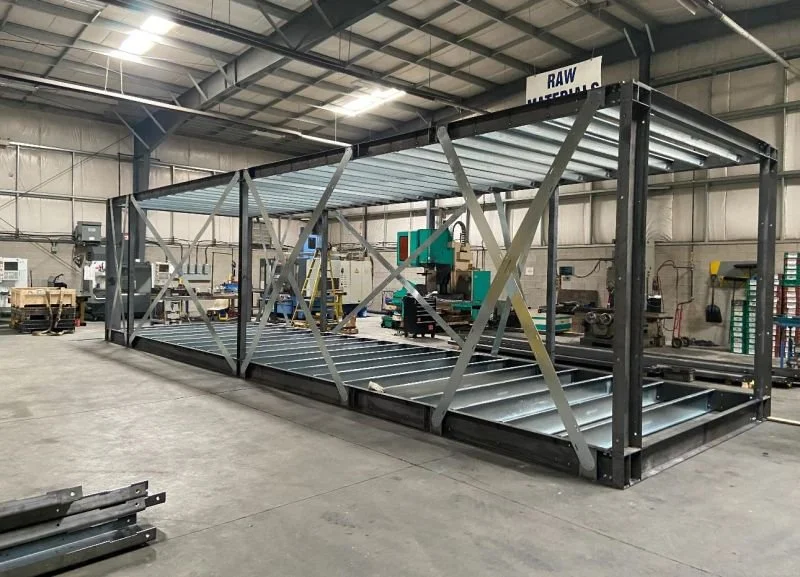
Photo Credit: Lanex Manufacturing
Applied Scenario: The Cost of Late Modular Adoption
A common scenario illustrates this challenge clearly. A mid-rise residential building is designed under conventional assumptions, with structural grids and unit layouts optimized for cast-in-place concrete. Late in design, modular construction is introduced to accelerate delivery.
What follows is predictable. Modules exceed transport limits, requiring redesign. Fire separations do not align across module boundaries, triggering code compliance issues. Structural systems must be re-engineered to accommodate stacking and lifting forces. Factory pricing increases to absorb inefficiencies introduced by the late transition.
The failure here is not modular construction itself, but the assumption that modular can be applied without rethinking the underlying design framework.
Key Takeaways
Modular construction is best understood as a construction methodology that reshapes the design and delivery process. It encompasses multiple systems, each with distinct technical and logistical implications. Successful modular projects require early decision-making, manufacturing-informed design, and disciplined coordination. Most challenges attributed to modular construction stem not from the method itself, but from its late or superficial adoption.
This article is part of the Modular 101 series on XLBench, a technical and educational guide to off-site construction systems. The next article in this series explores why modular design must begin with building code analysis.
•••
XLBench is your go-to platform for modular construction insights, setting industry benchmarks, fostering expert discussions, and sharing the latest trends. Through Benchboard, we provide data-driven research, thought leadership, and in-depth analysis to advance modular innovation.
Stay informed and be part of the conversation—follow XLBench for the latest updates, expert insights, and industry trends.
•••
xL Architecture & Modular Design (XLA) is an innovative architecture firm redefining the future of building through off-site construction technologies. With expertise in volumetric modular designs, and panelized building systems, we create cutting-edge solutions that seamlessly integrate form, function, and sustainability.