
Modular Construction Needs Modular Contracts Part 2: Responsibility, Risk, and What Canada Must Change
Responsibility and Liability: Where Canadian Contracts Break Down
One of the most critical shortcomings in Canadian construction contracts is the lack of clarity around responsibility and liability in modular projects. Volumetric modular construction compresses design, engineering, procurement, and construction into an early phase, yet Canadian contracts continue to assume that responsibility unfolds gradually on site.
For example, under CCDC 14, risk allocation is broadly framed around the constructor's responsibility for means and methods, while consultants remain liable for design intent. However, in modular construction, design intent and construction execution are inseparable once fabrication begins. Errors discovered after production cannot be resolved through traditional site instructions or substitutions, yet Canadian contracts offer no formal mechanism to acknowledge this reality.
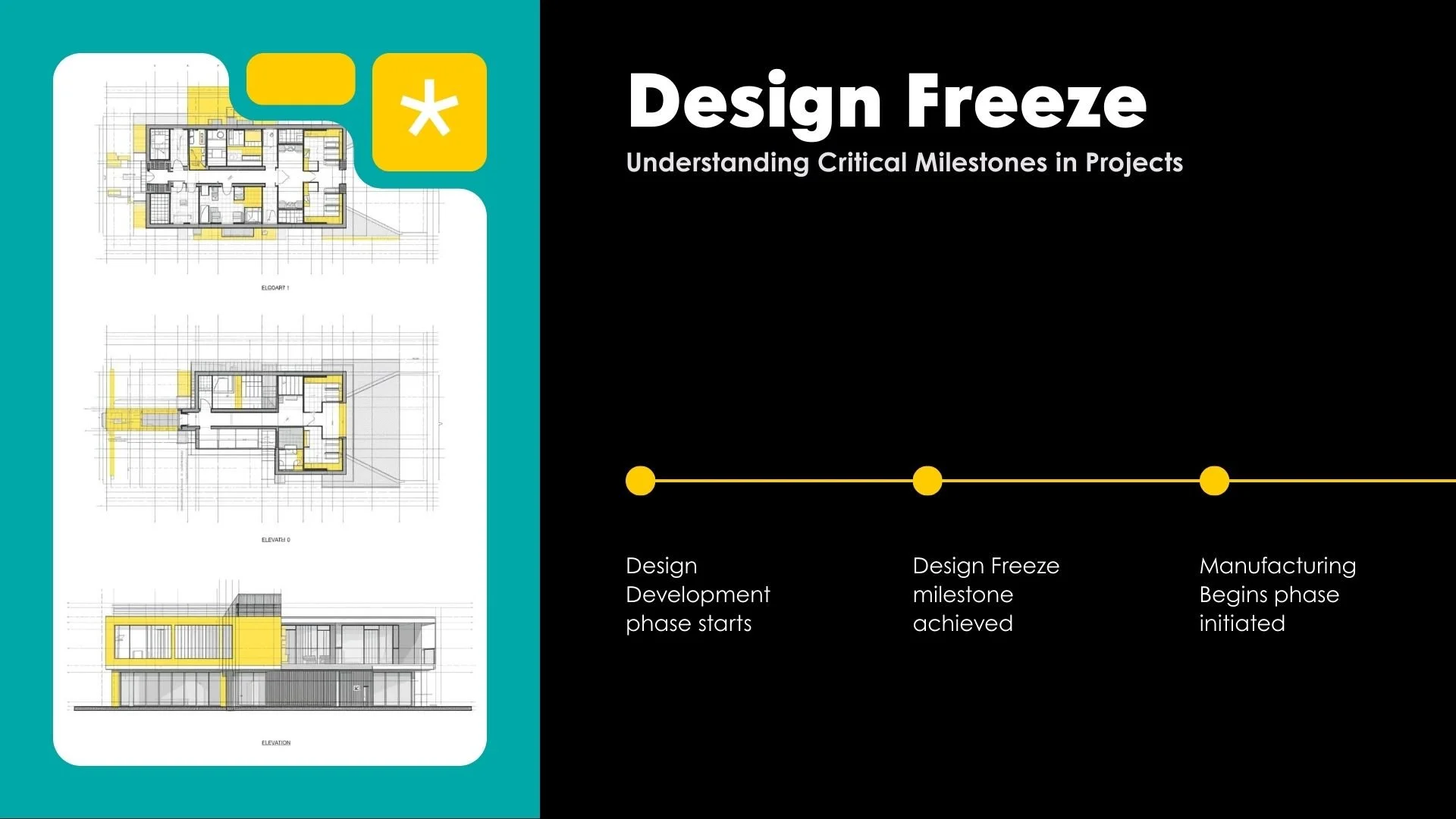
By contrast, the AIA VMC framework explicitly recognizes design freeze as a contractual milestone. Once manufacturing begins, responsibility for coordination errors is clearly defined, and the contract no longer assumes late-stage design flexibility. This distinction is critical. Without contractual recognition of a design freeze, Canadian modular projects are exposed to disputes when owners or consultants attempt to introduce changes after production has started.
Another major gap lies in factory-related liability. Canadian contracts do not clearly define who bears responsibility for defects arising in the factory, nor do they adequately address risk during transportation and staging. In practice, these responsibilities are often negotiated informally or buried in subcontract agreements, creating uncertainty and increased insurance costs. When a module arrives on site damaged or when a factory defect is discovered during assembly, the absence of clear contractual language forces parties into reactive dispute resolution rather than proactive risk management.
Financial Terms: Why Modular Projects Struggle to Get Financed
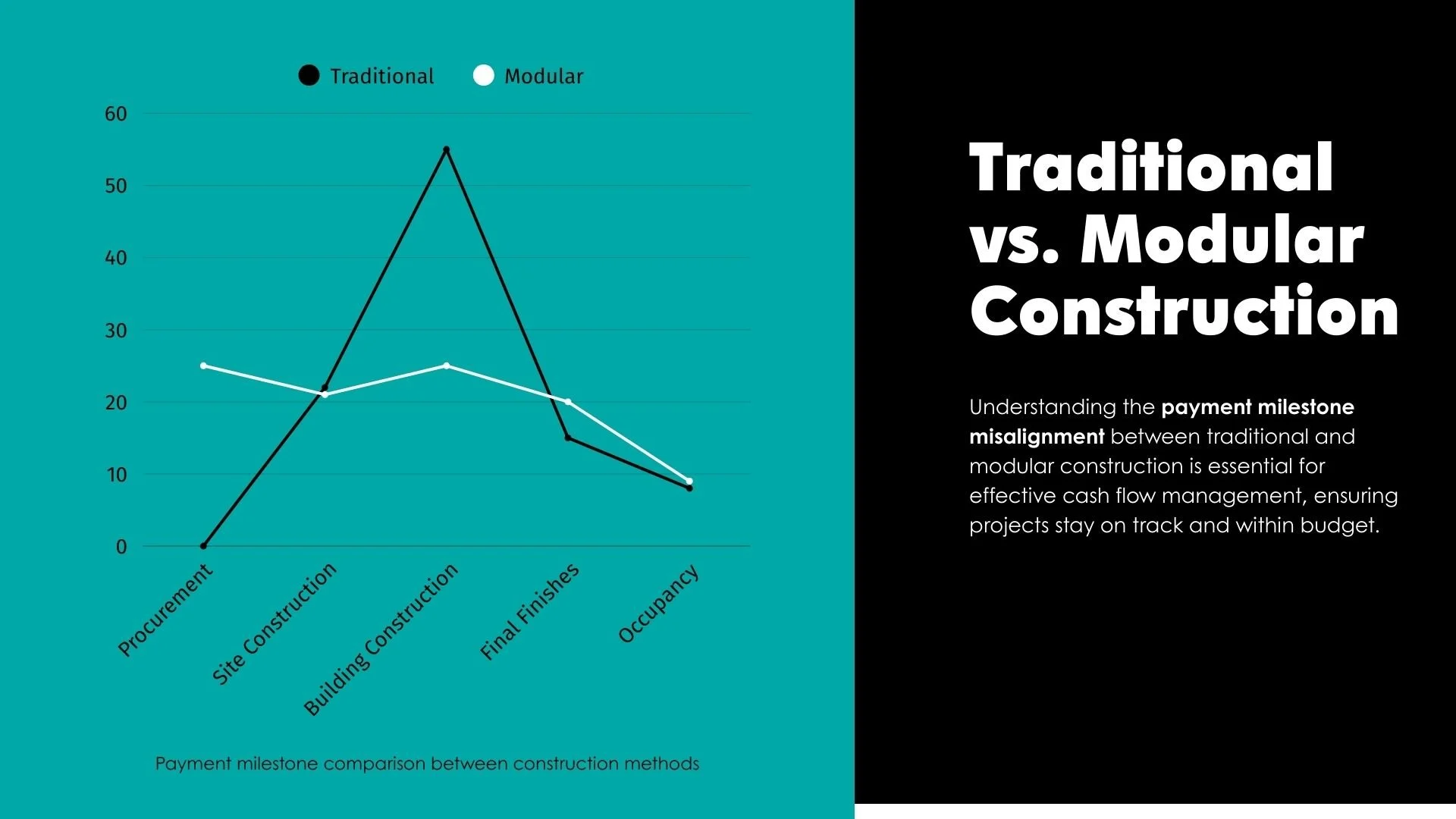
Financial misalignment is perhaps the most damaging consequence of outdated contract structures. Modular manufacturers require substantial upfront payments to procure materials, reserve factory capacity, and sequence production. However, traditional Canadian construction contracts are structured around payment milestones tied to site progress, such as foundation completion, framing, and substantial completion.
This mismatch creates friction at every level. Owners and lenders are hesitant to release large deposits before visible site work begins. Manufacturers cannot proceed without financial certainty. Contractors are caught in the middle, attempting to reconcile incompatible expectations. The result is either project delays while financing is restructured or manufacturers bearing disproportionate financial risk, which increases their pricing to account for cash-flow exposure.
The AIA VMC contracts address this directly by tying payments to manufacturing milestones, not site milestones. Fabrication, module completion, and readiness for shipment are all recognized as legitimate progress points. Canadian contracts offer no such clarity, forcing project teams to rely on bespoke amendments or side agreements that lenders may not fully understand or accept.
Without standardized contract language that legitimizes factory-based progress payments, modular projects will continue to face financing challenges, regardless of their technical merits. Lenders accustomed to site-based risk assessment lack the tools to evaluate factory production progress, and manufacturers lack the contract language to justify early payment requests. This structural misalignment constrains access to capital and limits the scalability of modular delivery in Canada.
What Canadian Contracts Lack to Support Modular Construction
The limitations of Canadian contracts are not minor omissions. They reflect a deeper structural misalignment with industrialized construction. Key elements missing from CCDC and OAA agreements include:
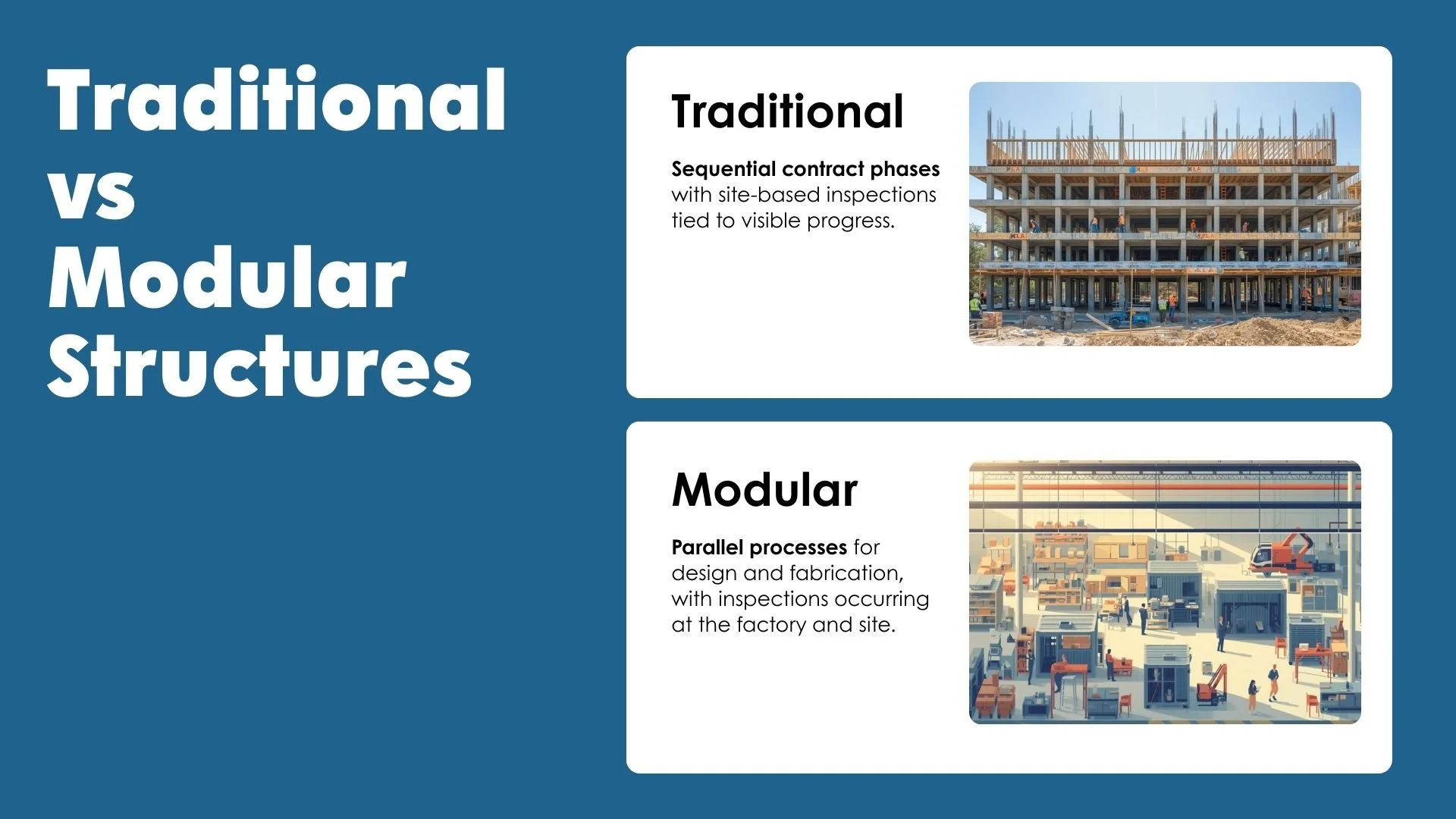
Recognition of the factory as a construction site: Current contracts assume construction occurs on a single geographical site. Factory work is treated as prefabrication or procurement rather than construction, creating ambiguity regarding inspection authority, insurance coverage, and payment triggers.
Contractual definition of design freeze: Without a formal milestone at which design changes become owner-initiated changes (with cost and schedule implications), manufacturers face constant exposure to scope creep and coordination rework.
Clear ownership of modules during fabrication and transport: Who owns a partially completed module in the factory? What happens if a module is damaged during transport? Canadian contracts do not address these questions, forcing project teams to negotiate bespoke risk allocation.
Alignment with CSA A277 workflows and inspection regimes: CSA A277 establishes factory certification procedures, but Canadian contracts neither reference nor integrate with this standard. As a result, municipalities, owners, and consultants often treat factory certification as supplementary rather than equivalent to site inspection.
Payment structures tied to off-site production: Progress payments remain linked to on-site activities, creating cash-flow strain for manufacturers and financing uncertainty for owners.
Consultant scopes that reflect early and intensive coordination demands: Architects and engineers must resolve coordination issues before fabrication begins, yet consultant agreements such as OAA 600 assume traditional construction-administration phasing, in which critical construction coordination occurs gradually during site construction rather than the design stage.
Without these elements, modular construction is forced to operate within a legal framework that assumes site-based, sequential delivery, undermining the very efficiencies modular methods are meant to provide. Every modular project becomes a negotiation exercise, with contracts amended through rider clauses, supplementary conditions, and side letters, creating inconsistency, increasing legal costs, and reducing confidence among lenders and insurers.
Who Is Responsible for CCDC Contracts and Why Change Is Slow
The Canadian Construction Documents Committee (CCDC) is jointly sponsored by national organizations representing owners, contractors, engineers, and architects. While this structure ensures broad consensus, it also makes change incremental and conservative. CCDC documents evolve through committee deliberation, requiring agreement across stakeholder groups with different risk appetites and commercial interests.
CCDC documents are intentionally generic, designed to apply to many project types, including institutional buildings, infrastructure, residential, and industrial projects. Modular construction challenges this approach. Its risks, sequencing, and financial structure differ fundamentally from traditional construction, making generic language increasingly inadequate.
Meaningful change will likely require either modular-specific contract supplements, similar to how CCDC 14 addresses design-build, or entirely new contract families developed with direct input from modular manufacturers, lenders, insurers, and code authorities. Waiting for organic evolution within existing documents may take years; the industry does not have that time, particularly as housing crises in Ontario, British Columbia, and other provinces demand faster delivery methods.
The precedent exists: the AIA developed its VMC contract series in response to industry demand, not as an academic exercise. Canada's contract drafting bodies must recognize that modular construction is not a niche delivery method but an emerging standard that requires legal infrastructure aligned with its operational reality.
What a Canadian Modular Contract Should Look Like
Canada does not need to reinvent modular construction, but it does need to rethink how it contracts for it. A Canadian modular contract framework should incorporate the following principles:
1. Recognize the factory as a construction site
Construction begins when fabrication begins, not when modules arrive on site. This recognition should be embedded in the definition of "site," "place of work," and "construction activity," allowing factory work to be treated as legitimate construction for the purposes of inspections, payments, insurance, and lien rights.
2. Define design freeze as a contractual milestone
Design freeze must be formally established, with clear consequences for any changes initiated after manufacturing begins. This protects manufacturers from scope creep, clarifies consultant liability for coordination errors, and aligns owner expectations. Changes post-freeze should trigger formal change orders with cost and schedule implications, not informal adjustments.
3. Legitimize factory-based payment milestones
Material procurement, module fabrication, factory quality inspections, and module completion should trigger progress payments in the same way that concrete pours, framing milestones, or roofing completion do on traditional projects. Payment schedules must reflect where value is created: in the factory, not only on site.
4. Clarify ownership and risk during fabrication and transport
Contracts must specify when title transfers from the manufacturer to the contractor or owner, who bears the risk of loss or damage during transport, and what happens if modules are damaged before installation. Without this clarity, disputes are inevitable, and insurance coverage may be ambiguous.
5. Align with CSA A277 certification
Factory certification under CSA A277 should be treated as equivalent to site inspection, not supplementary. Contracts should explicitly reference CSA A277, establish certification as a condition precedent to payment, and define the roles of factory certifiers, site inspectors, and consultants in code-compliance verification.
6. Adapt consultant agreements to front-loaded coordination
Architects and engineers play a far more intensive role earlier in modular projects, coordinating structure, envelope, fire separations, MEP systems, and mateline details before fabrication. Contracts like OAA 600 should be adapted to reflect this front-loaded responsibility, with fee structures and liability provisions that recognize the intensity of early design rather than assuming traditional construction-phase services spread over a longer timeline.
7. Establish dispute resolution mechanisms specific to modular delivery
Traditional construction disputes often arise during site work and can be resolved through site instructions, deficiency notices, or phased corrections. Modular disputes, such as factory defects, transportation damage, and coordination errors discovered post-fabrication, require different resolution mechanisms. Contracts should establish protocols for factory inspections, third-party technical review, and expedited dispute resolution to avoid production delays.
A contract framework that reflects these principles would not only reduce disputes but also actively enable modular construction to scale across Canada. It would provide lenders with clarity, manufacturers with financial predictability, consultants with defined scopes, and owners with realistic expectations. Most importantly, it would treat modular construction not as an exception requiring workarounds, but as a legitimate delivery method deserving of legal infrastructure aligned with its operational reality.
Modular construction cannot scale on technical innovation alone. Contracts shape risk allocation, financing feasibility, and collaboration. The AIA's VMC framework demonstrates what is possible when legal structures are aligned with construction reality. Until Canadian contracts evolve to do the same, whether through CCDC supplements, new contract families, or industry-led standard terms, modular projects will continue to face avoidable friction, uncertainty, and cost.
Canada's housing crisis demands faster, more predictable construction. Modular offers a path forward. Contracts must catch up.
•••
XLBench is your go-to platform for modular construction insights, setting industry benchmarks, fostering expert discussions, and sharing the latest trends. Through Benchboard, we provide data-driven research, thought leadership, and in-depth analysis to advance modular innovation.
Stay informed and be part of the conversation—follow XLBench for the latest updates, expert insights, and industry trends.
•••
xL Architecture & Modular Design (XLA) is an innovative architecture firm redefining the future of building through off-site construction technologies. With expertise in volumetric modular designs, and panelized building systems, we create cutting-edge solutions that seamlessly integrate form, function, and sustainability.